
Full Service vs Hourly Interior Design: Which Is Right for Your Project?
Choosing between full service and hourly interior design can significantly impact your budget, timeline, and overall project experience. While hourly design may appear more affordable at first, larger projects often benefit from the structure and predictability of full service design. The right choice depends on your project scope, how involved you want to be in the process, and whether you value flexibility or comprehensive management. According to Pacaso’s interior design cost guide, interior designers commonly charge either hourly rates or flat project fees depending on the scale and complexity of the work.
After more than two decades in the industry, I have found that many clients focus heavily on the pricing structure itself without fully understanding how each model affects the design process. The reality is that the right pricing model can save you time, reduce stress, and often prevent costly mistakes.
What Is Full Service Interior Design?

Full service interior design is a comprehensive approach where the designer manages every stage of the project from concept to completion. Instead of charging for every hour spent, the designer provides a fixed project fee or a percentage of the total project cost based on the agreed scope of work.
This typically includes:
Initial consultations
Space planning
Design concepts and presentations
Material and finish selections
Furniture sourcing
Procurement and order management
Coordination with contractors and vendors
Site visits and installation oversight
Final styling
The project fee is usually divided into milestone payments throughout the project lifecycle. This structure gives clients clarity on design costs from the beginning.
For larger residential renovations, new builds, or turnkey furnishing projects, this model creates a smoother experience because the designer becomes the primary point of coordination. Clients who choose full service design are often looking for expertise, efficiency, and a cohesive final result without managing countless moving parts themselves.
Explore Full-Service Interior Design with Pure Coalesce.
How Hourly Interior Design Works
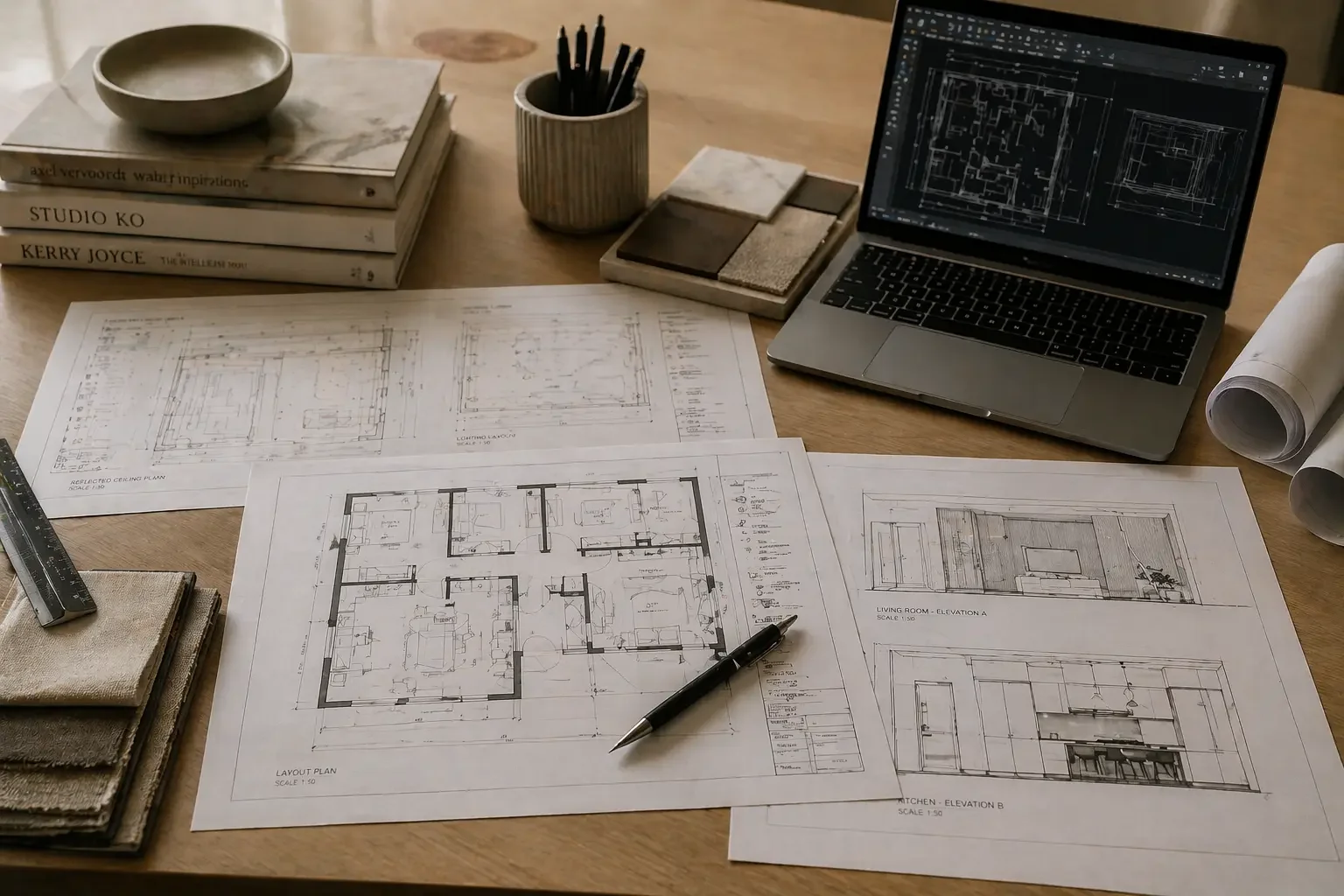
Hourly interior design follows a pay as you go structure. Clients are billed based on the actual time spent on their project.
Billable hours may include:
Consultations
Space planning
Drawing preparation
Sourcing furniture and finishes
Vendor communication
Site visits
Revisions
Installation coordination
Many designers request an upfront retainer that is applied toward future invoices.
Hourly design works best for projects with a clearly defined scope. For example, selecting paint colors for one room or refining an existing furniture layout may only require a few focused sessions. This model is also common for technical drafting and design development work because the tasks are easier to measure and estimate. For clients who already have a vision and simply need professional guidance, hourly consultations can be a practical option.
Learn more about our services to find the right fit for your project.
The Biggest Misconception About Hourly Design
One of the most common assumptions is that hourly billing automatically costs less. In reality, this is not always true.
Interior design involves far more than selecting furniture or choosing paint colors. Behind every project are countless emails, vendor follow ups, revisions, delivery schedules, troubleshooting calls, and sourcing decisions. Creative work is also difficult to predict. Some concepts come together quickly while others require multiple rounds of exploration.
On larger projects, hours accumulate rapidly. For example, a kitchen renovation involving layout revisions, cabinetry coordination, appliance selections, contractor communication, and installation management may require dozens of hours beyond the visible design work. With a fixed fee structure, the designer absorbs some of that unpredictability. With hourly billing, the client carries the risk of expanding hours.
This is why many full service projects ultimately become more cost effective despite the higher upfront number.
When Full Service Interior Design Makes Sense
Full service design is ideal for projects that involve multiple layers of coordination and decision making.
This may include:
Whole home renovations
New construction projects
Multiple room furnishing projects
Luxury turnkey interiors
Commercial spaces
Kitchen and bathroom remodels
Clients who travel frequently, work long hours, or simply prefer a streamlined experience often benefit from full service management. This approach also creates stronger design continuity across the entire project because one team oversees every detail from start to finish. Budget planning becomes easier as well because your design fees are established upfront.
When Hourly Interior Design Works Best
Hourly design works well for smaller or highly focused projects where the scope is unlikely to change significantly.
Examples include:
Furniture consultations
Paint color selection
Styling assistance
Space planning for a single room
Material selection guidance
Reviewing contractor plans
Technical drafting support
It also suits clients who prefer a more hands on approach and want greater control over purchasing and project management. For experienced homeowners who are comfortable managing vendors themselves, hourly consulting can provide professional direction without committing to comprehensive services.
If you are still deciding whether your project requires a designer, you may find our article on Can I Hire an Interior Designer for Just One Room? helpful.
The Hybrid Approach: A Flexible Middle Ground
In practice, many interior design projects use a combination of both pricing models. A designer may offer a fixed fee for the core scope of work while charging hourly for anything beyond the original agreement.
For example:
Additional site visits
Major design revisions
Expanded project scope
Extra sourcing requests
Ongoing consultation after project completion
This hybrid approach provides structure while still allowing flexibility as projects evolve. It also creates transparency for both client and designer, especially when projects become more complex over time.
Questions to Ask Before Choosing a Pricing Model
Before hiring a designer, ask yourself the following questions:
How large is the project?
Larger projects usually benefit from full service management because coordination becomes increasingly complex.
How involved do I want to be?
If you want someone to manage every detail, full service is usually the better fit. If you enjoy handling logistics yourself, hourly consulting may work well.
Is budget predictability important to me?
Fixed fees provide more certainty, while hourly billing may fluctuate depending on revisions and project changes.
Am I comfortable managing vendors and contractors?
Many clients underestimate how much coordination happens behind the scenes during a renovation or furnishing project.
Does my project have a clearly defined scope?
Hourly billing works best when the scope is straightforward and unlikely to evolve significantly.
Final Thoughts
There is no universally better pricing model in interior design. The best choice depends entirely on your project goals, budget structure, and preferred level of involvement.
Full service interior design offers comprehensive management, stronger project continuity, and predictable costs for larger projects. Hourly design provides flexibility and targeted expertise for smaller or more focused needs.
The key is understanding not just how you are paying, but what type of experience you want throughout the process.
A thoughtful pricing structure creates clarity for both the client and the designer, which ultimately leads to smoother projects and better results.
FAQ
Is full service interior design more expensive?
Not necessarily. While the upfront fee may appear higher, full service projects can often be more cost effective because they include comprehensive management and reduce the risk of escalating hourly charges.
What is the average hourly rate for an interior designer?
Hourly rates vary based on experience and location. Many professional interior designers charge between $100 and $250+ per hour depending on project complexity and expertise.
Can I switch from hourly to full service later?
Some designers allow this transition if the project expands, though it depends on the original agreement and scope of work.
Is hourly interior design good for renovations?
Small renovations can work well with hourly consulting. Larger renovations involving contractors, procurement, and multiple vendors are often better suited for full service management.
Which option is better for one room projects?
Single room projects often work well with hourly consulting, especially if the scope is limited and the client wants to remain involved in purchasing and coordination.
Do full service designers also charge hourly fees?
Yes. Many designers use a hybrid structure where the primary scope is fixed fee based, but additional services outside the contract are billed hourly.