
Do I Need an Interior Designer for a Renovation?
Renovations are exciting—but they can also become overwhelming very quickly. Many homeowners and business owners assume they can manage a renovation with a contractor and a few inspiration images. While that approach may seem efficient, it often leads to costly revisions, mismatched spaces, and layouts that don’t truly function.
This is where interior designer services become invaluable. A professional interior designer doesn’t just make a space look beautiful—they create a system that ensures every element works together, from layout and lighting to materials and circulation.
If you're wondering whether hiring a professional interior designer is necessary for your renovation, the answer depends on how much risk you're willing to take—and how well you want your space to perform long term.
When Interior Designer Services Are Essential for Renovations

The most critical moment in any renovation happens before demolition begins.
This planning stage forms the foundation for everything that follows. A well-developed space plan ensures that every requirement is accounted for before construction starts. Electrical layouts, lighting placement, plumbing coordination, HVAC planning, and ceiling designs all depend on this initial layout.
Planning on paper allows revisions to happen quickly and cost-effectively. Once walls are built, changes become significantly more expensive and time-consuming.
Every element in a renovation is connected. Moving one feature affects many others. While adjustments during construction are sometimes unavoidable, having proper plans in place greatly reduces disruption and prevents cascading issues across systems.
This is where space planning services provide measurable value. They transform ideas into actionable drawings that contractors can follow accurately, reducing confusion and improving efficiency throughout the renovation process.
The Most Common Renovation Mistake I See
One of the most frequent mistakes occurs when clients attempt to manage renovations using a contractor and a Pinterest board alone.
Pinterest is an excellent source of inspiration, but it is not a design plan. What works beautifully in one space may not translate to another due to differences in layout, proportions, lighting conditions, or architectural constraints.
Contractors build—but they do not typically analyze circulation patterns, furniture clearances, or spatial proportions. These details are essential to making a space functional.
Without professional planning, common issues include:
Poor furniture placement
Inadequate circulation space
Lighting that fails to create the desired mood
Materials that clash rather than complement
Furniture purchases that don’t work together
Lighting design, in particular, is often underestimated. Lighting defines mood, enhances functionality, and must be synchronized with ceiling layouts and electrical plans. Without coordinated planning, even beautiful materials can feel incomplete.
If you're unsure whether your project requires professional help, this guide on 5 signs you need to hire an interior designer is a helpful place to start.
Case Study: Transforming a Restaurant into a High-Energy Bar on a Minimal Budget
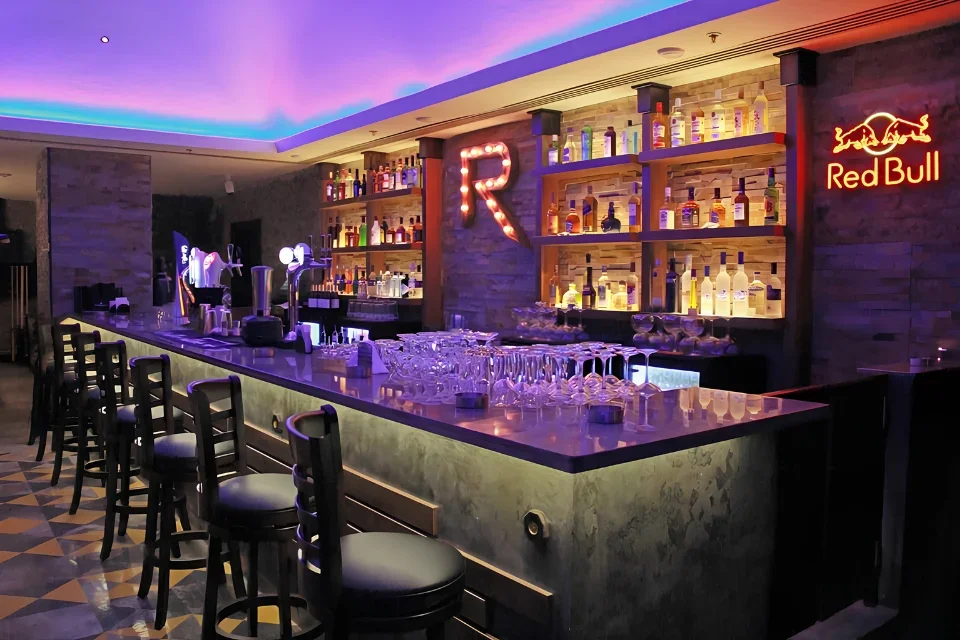
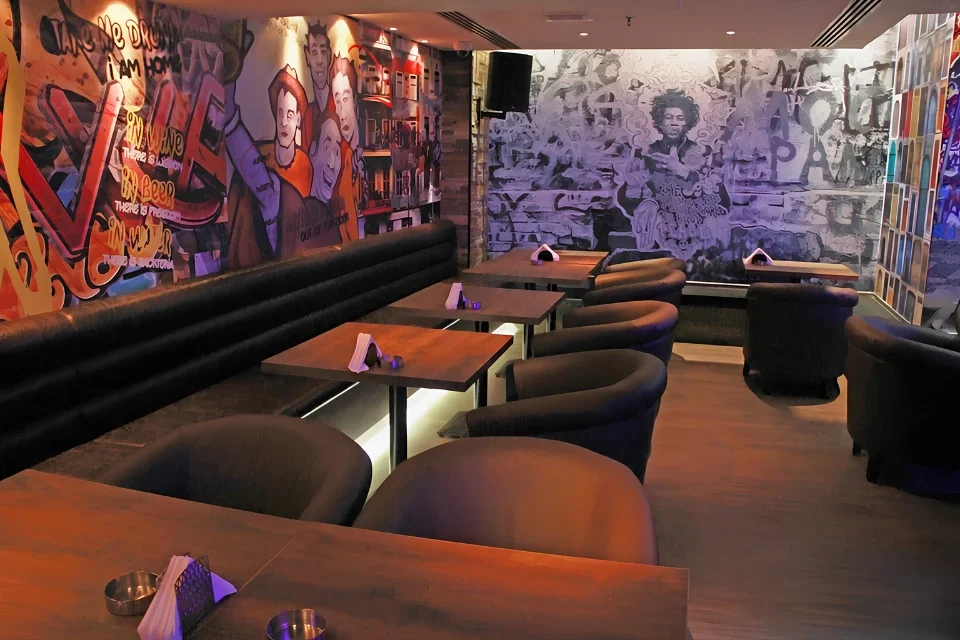

A powerful example of strategic commercial interior design involved converting an existing Lebanese restaurant located in Holiday Inn, Al Barsha- Dubai into a vibrant, high-energy bar—without extensive structural changes.
The existing space featured stone veneer walls and dark wood paneling. Visualizing this environment as a lively bar required careful prioritization, especially given the limited budget.
The first step was to establish a functional layout by dividing the space into zones:
A central bar with dance floor positioned as the focal point
A performance stage placed strategically to support live entertainment
A pool table zone near the entrance for active engagement
A lounge area at the far end for quieter social interaction
Since replacing the cement flooring was not feasible, a bold yellow pattern was painted directly onto the existing grey surface. This created a strong visual boundary that defined the dance floor while adding character to the space.
Walls in the lounge zone were enhanced with vibrant graffiti artwork, drawing attention away from the heavy stone finishes and introducing a playful visual layer.
Dividing the space into three functional zones improved traffic flow and service efficiency. Guests could intuitively navigate the environment depending on their activity—playing pool, dancing, or relaxing.
This project demonstrates how thoughtful renovation layout planning can deliver maximum visual impact with minimal structural intervention.
What Happens When Design Is Done Piece by Piece

Another common scenario occurs when clients begin designing independently and select furniture or finishes based on individual preference rather than overall cohesion.
In one residential living room makeover, a client had purchased several pieces she loved. However, when combined, the elements lacked harmony and created a visually disjointed space.
Designers approach spaces holistically. While selecting upholstery, considerations also include flooring, wall finishes, curtains, lighting, and paint colors.
Visualization tools such as:
Mood boards
Renderings
Material swatches
allow clients to see the full picture before final decisions are made.
In this case, several existing pieces were retained while others were replaced strategically. The result was a cohesive environment where all elements worked together to create visual balance and functional comfort.
This kind of coordination prevents costly mistakes and reduces the likelihood of regret after installation.
For readers exploring the difference between interior designers and decorators, this article provides useful clarity
What Makes a Renovation Truly Successful
A renovation is not truly successful simply because it looks attractive.
Success happens when every aspect of the space aligns with the client’s lifestyle. The space should feel intuitive to use and capable of adapting to daily routines.
Design should reflect individuality—not trends alone. Every project begins with a conversation focused on how the client wants to feel in the space. That emotional response becomes the foundation for the design process.
Spaces designed around intention tend to function better because they support behavior rather than restrict it.
Design philosophy built around conscious living focuses on:
Productivity
Balance
Calm environments
Synergy between form and function
Rather than following a single design style, successful renovations respond to the personalities and needs of the people using them.
This lifestyle-based approach is what transforms a renovation from decorative to transformative.
Understanding the Investment in Interior Designer Services
Budget considerations often influence the decision to hire a designer. However, professional planning frequently reduces unnecessary spending by preventing costly revisions and incorrect purchases.
Understanding the financial structure behind interior designer services helps clients make informed decisions.
For a deeper look at renovation budgets and pricing expectations, this resource explains how much it costs to hire an interior designer.
If you are considering renovating just one room, read more on Can I Hire an Interior Designer for Just One Room?
Frequently Asked Questions
Do I need an interior designer for a small renovation?
Even smaller renovations benefit from professional planning, especially when layouts, lighting, or storage solutions are involved.
Can I work with a contractor without a designer?
Yes—but without professional planning, the risk of layout errors, mismatched materials, and inefficient spaces increases significantly.
When should I hire an interior designer during renovation?
The best time is before demolition, during the planning stage. This allows proper coordination of all systems before construction begins.
Do interior designer services save money?
In many cases, yes. Professional planning prevents costly changes, incorrect purchases, and delays that often exceed the initial design investment.
If you would like to hear more about our Interior Design services, please contact us and we would love help.